A Rainy Afternoon, Built Around a Parlour Game
Plan a rainy afternoon parlour game gathering with one easy-to-explain game, a comfortable setup, and enough open space for conversation and breaks.
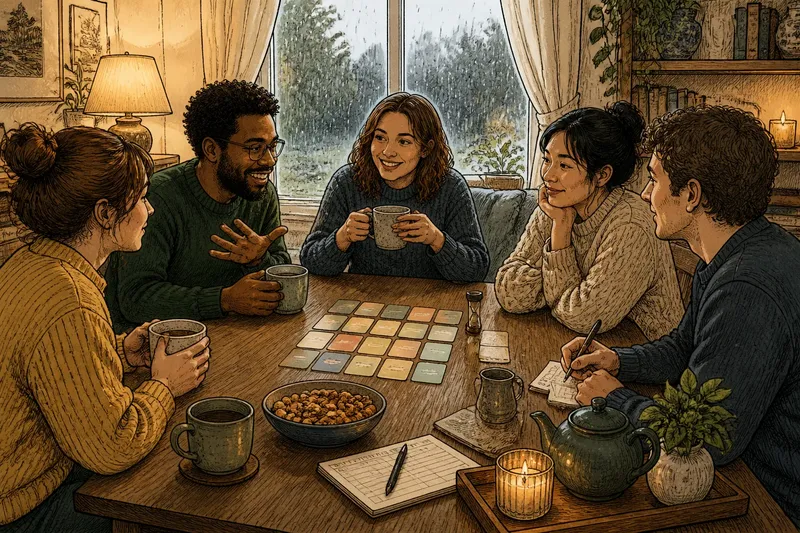
Rain taps the window, the tea is steeping, and the first guest asks, “What are we playing?” A rainy afternoon parlour game gathering works best when the answer is simple: one game everyone can learn quickly, with room to pause, chat, and drift back in.
The trouble is rarely a shortage of things to do. It is usually a mismatch between the game, the group, and the mood of an unhurried visit. Use the fixes below in order, from choosing the game to handling the moment when attention wanders.
When choosing a game becomes the whole afternoon
A shelf full of options can turn a friendly invitation into a committee meeting. Guests compare rules, recall old favorites, and wait for someone else to decide. By the time a choice emerges, the gathering can feel more formal than it needs to.
Choose one main game before guests arrive, and keep one simple alternative in reserve. A parlour game should invite people in rather than require a long briefing, specialized knowledge, or a competitive appetite. Word games, light guessing games, and familiar card games often suit a mixed group, provided the rules can be explained in a few sentences.
Think about who is coming, not just what you enjoy playing. A game built around quick wordplay may suit people who like improvising, while a quiet observation game may be easier for guests who prefer time to think. If you are unsure, pick a game with turns that are easy to follow and no one is eliminated early.
Say you expect a few friends with different levels of familiarity with games. You choose a simple word-association game, explain that each person gives a connected word in turn, and let anyone pass; the expected result is that guests can join without learning a long rule set or feeling trapped when a turn comes around.
When the rules take longer than the first round
Rules become a barrier when the host explains every edge case before anyone has played. Guests then have to remember a speech instead of learning from the rhythm of a turn. A complicated setup can also make late arrivals feel as if they have missed their chance to join.
Start with the object of the game, the basic turn, and how a round ends. Leave unusual situations for the moment they arise. If a small disagreement appears, make a temporary ruling that keeps play moving, then check the printed rules between rounds rather than interrupting everyone.
Keep the game materials visible and within reach. Put a deck of cards, paper, pencils, or the game’s own pieces on a clear table, and place the rules nearby for reference. If the game needs a scorekeeper, ask for a volunteer rather than quietly assigning the task to the person who seems most organized.
For a game that relies on clues or prompts, prepare a few accessible ones before the gathering. Avoid prompts that require private knowledge of another guest or leave someone out of the joke. The goal is a shared opening, not a test of who knows the group best.
When the table feels crowded or too formal
A cramped setup makes people wary of moving pieces, reaching for snacks, or leaving for a refill. A rigid seating arrangement can make a casual afternoon feel like a tournament. Clear enough table space for the game, but do not let the game occupy the whole room.
Set out only what the chosen game needs. Move fragile ornaments, extra dishes, and unrelated clutter elsewhere, and keep drinks on a side table if spills could damage cards or paper. Give people a comfortable place to sit without requiring everyone to face the same direction.
Small comforts matter more than elaborate decoration. A lamp can help on a dim afternoon; a tray keeps mugs together; a bowl of easy-to-eat snacks means players do not have to juggle plates during a turn. Keep the route to the kitchen or bathroom clear so people can step away without asking the whole table to rearrange.
Consider sound as part of the setup. Turn down background music if people need to hear clues or one another, and avoid a playlist that demands attention. Rain against the windows can provide enough atmosphere on its own.
When one person dominates and others go quiet
Some guests naturally explain rules, suggest strategies, or answer first. Their enthusiasm can help a game get started, but it can also make quieter players feel they are watching rather than participating. This is especially likely when the host lets the quickest voice set the pace.
Choose turn-taking rules that distribute attention, and make passing an acceptable option. If the game allows it, invite the next player by name only when it is their turn, rather than asking the group to compete to respond. Keep playful commentary kind; teasing about a wrong answer can make a light game feel like a performance.
If a guest is unsure, offer a low-pressure entry point: they can watch one round, partner with someone, or help keep score. Do not turn that offer into an assignment. A person who came to visit may prefer conversation to participation, and that can still fit the afternoon.
Keep the stakes small. A silly title for the winner or the right to choose the next snack can be fun, while a prize or elaborate scoring system may make a relaxed game feel consequential. If the group enjoys competition, let that energy come from the players rather than imposing it in advance.
When the game crowds out conversation
A gathering built around a game can become too focused on completing it. People may feel obliged to stay through another round, even when the best part of the afternoon is an unplanned story or a quiet catch-up. The solution is not to ban conversation; it is to make pausing part of the plan.
Play in short rounds and leave natural breaks between them. Put the kettle on after a round, invite people to refill their cups, or simply ask whether the group wants another. Avoid starting a lengthy new game late in the visit if people may need to leave at different times.
Choose a game that tolerates interruptions. A round-based activity is easier to pause than one with a long continuous story or a complicated board position. If someone arrives late, they can join the next round without the host having to reconstruct what happened earlier.
Watch the room, not just the score. If players begin talking over turns, checking the time, or leaving their seats, treat that as a cue to pause rather than a problem to correct. Let conversation take the lead; the game is a reason to gather, not an obligation to finish.
When should the game pause or change?
How do you choose a game for mixed ages?
Favor clear turns, familiar materials, and a pace that gives people time to think. Avoid making reading speed, obscure knowledge, or physical dexterity the main route to success unless you know everyone wants that challenge.
What if a guest arrives after play starts?
Pause at the next natural break and give them the short version of the rules. If the round is nearly over, let them watch or join the following round rather than forcing a restart.
What if nobody wants to keep score?
Drop scoring if the game still works without it, or keep a casual count with pencil and paper. If tracking points becomes more effort than fun, treat each round as its own occasion.
How do you end without an awkward final round?
Agree on one last round when the group is ready for a stopping point, then put the materials away and move naturally to tea or conversation. If guests have different departure times, do not make everyone wait for a formal finish.
When the afternoon needs a quieter pace
Not every gathering has to maintain the same energy from arrival to goodbye. A rainy afternoon can begin with conversation, make room for a game once everyone is settled, and end with people chatting while the cards or pencils sit untouched.
Use the main search phrase, rainy afternoon parlour game, as a reminder of the occasion rather than a demand for constant play: keep the rules light, the table comfortable, and the next round optional. The useful plan is one guests can step into and out of without asking permission.
Before people arrive, set out the chosen game and the simplest materials it needs, then decide where drinks and snacks will go. Once the first round begins, let the group tell you whether it wants another; a good host leaves space for the afternoon to become something other than a game.