Sketchbook or Loose Sheets: Choosing a Surface for Drawing
Choose a sketchbook or loose sheets by matching portability, page size, and your preferred way to arrange finished drawings with the work you make.
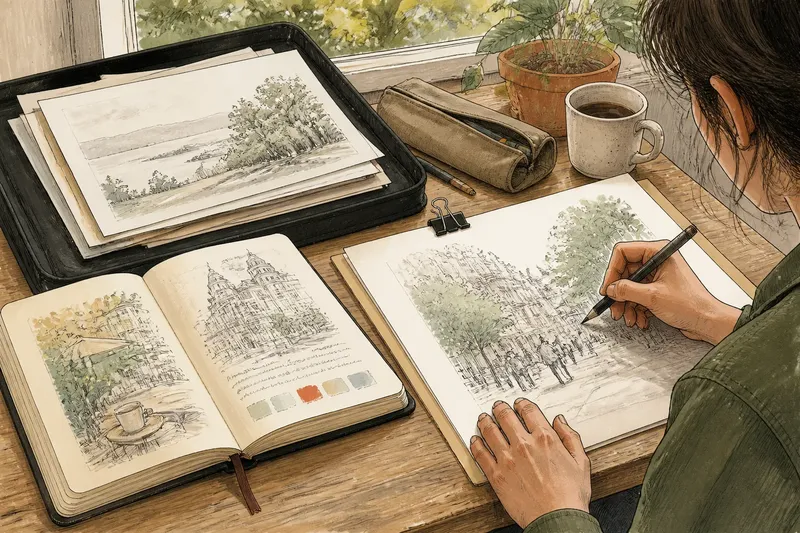
Should you draw in a sketchbook or on loose sheets? The right surface depends less on drawing skill than on where you work, how much room your pictures need, and whether you want finished pieces to stay together or move freely.
A sketchbook keeps pages in sequence and makes a dependable companion for drawing away from home. Loose sheets offer more control over size, paper choice, and what happens to each finished drawing. A third option—keeping a small sketchbook for everyday work and separate sheets for larger pieces—suits people whose drawing habits change from one session to another.
A sketchbook keeps drawing sessions together
A bound book is easy to carry as a single object. Slip it into a bag with a pencil and eraser, and you have a ready surface for a café table, a park bench, or a short break at home. The covers also protect the pages from rubbing against other things you carry.
Sequence can be part of the appeal. Turning through a book lets you see how a subject, place, or idea develops across several sessions. If you enjoy keeping sketches beside notes, color tests, or observations, the pages form a compact record without needing a separate filing system.
The tradeoff is that a book sets the page size and shape. A broad landscape, a full figure, or a drawing that needs room around its edges may feel cramped in a small format. The binding can also make the center of a spread less comfortable to draw across, especially if you want a single image to span both pages.
Choose a sketchbook if you value portability, a continuous record, and a surface that is always ready. Look at the paper as well as the cover: some books have smooth pages suited to crisp pencil marks, while textured paper can give graphite or colored pencil a different feel. If you use wet media, check the product label for its intended materials rather than assuming every sketchbook page will suit them.
Loose sheets let each drawing choose its own space
With loose paper, you can pick a sheet size for the subject instead of adapting every subject to one book. A small drawing can stay compact; a wide scene can spread across a larger page. You can also keep different paper types on hand for different tools, such as smooth drawing paper for fine pen lines and toothier paper for dry media.
Sheets are easy to lay out, compare, sort, or give away. You can arrange a group of drawings on a desk before deciding which belong together, and a finished piece does not have to remain attached to unrelated practice work. For storage, a portfolio, document box, or flat drawer can keep sheets together and reduce curled corners.
That flexibility asks for a little more organization. A loose drawing can be misplaced, bent, or separated from the note that explains what you were trying. Set aside a folder or portfolio before you start, and use dividers or labeled envelopes if you work across several subjects or paper types.
Choose loose sheets if page size matters, if you like editing the order of your work, or if you expect to keep finished drawings separately. They are also a natural fit when you want to display or share selected pieces without removing pages from a book.
A hybrid setup suits changing kinds of work
You do not have to choose one surface for every drawing. A pocket-size sketchbook can handle quick observations and ideas, while loose sheets give longer sessions or larger compositions room to develop. This division keeps the book convenient without forcing every finished piece into its dimensions.
Say you usually sketch buildings during a walk but sometimes want to draw a broad street scene at home. You could carry a landscape-oriented sketchbook for small building studies and keep larger sheets in a flat folder at your desk. The expected result is a portable record for short outings and enough space for the scene that needs a wider view.
A hybrid setup works best when each surface has a clear job. If you keep transferring unfinished ideas from book to sheet, you may prefer one format after all. If the two formats serve different subjects or settings, the distinction can make it easier to begin without searching for the perfect page.
How do you choose a drawing surface?
Which is easier to carry?
A sketchbook is usually simpler to pack because its pages and covers stay together. Loose sheets can travel too, but they need a rigid portfolio or another protective folder to keep them flat.
Which option is better for large drawings?
Loose sheets are the more flexible choice when you want to change page size or orientation from one piece to the next. A sketchbook works well for larger work only if its fixed dimensions give you enough room.
Can you remove a page from a sketchbook?
Some books are designed with perforated or detachable pages, while others are not. Check the binding and product details before buying if you want to remove drawings; tearing a page from a tightly bound book can damage its edge or nearby pages.
How should you store loose drawings?
Keep them flat in a portfolio, document box, or drawer, and separate finished work from blank paper and practice sheets. If a drawing uses a medium that can smudge or transfer, add a suitable protective sheet or follow the material maker’s storage advice.
Choose by imagining the finished drawing
Before buying a book or a stack of paper, picture what a satisfying drawing session looks like for you. If it ends with a page kept in order beside notes and earlier sketches, a sketchbook is likely to fit. If it ends with a drawing you want to compare, display, or file on its own, loose sheets make that easier.
For a simple decision, match the surface to your most common setting first: choose a sketchbook for regular drawing on the go, loose sheets for work that needs changing sizes or separate storage, and a hybrid if those are genuinely different activities. The best drawing surface is the one that leaves you ready to start—and gives the finished page a place that makes sense.