When Collecting Cards Became a Pastime
When collecting cards became a pastime, the change depended on how people kept and organized them. Learn what made ordinary cards worth revisiting.
When did collecting cards become a pastime rather than a habit of saving scraps? When collecting cards became a pastime, people began keeping printed cards for more than their original use: a card could be saved for its image, connection, or place in a group. There was no single turning point that applied to every kind of card.
Cards began with practical and social uses
Playing cards were made for games, while visiting cards identified callers and trade cards advertised businesses or products. Greeting and picture cards carried messages, commemorated occasions, or presented illustrations. These different uses shaped what people noticed and chose to keep.
A card could outlast its purpose because someone liked its design or associated it with a person or place. Its small format made it easy to store in a drawer, album, or desk, but that convenience alone did not make it a collection.
Printing put more kinds of cards into circulation
Printing and distribution helped publishers and businesses circulate cards for games, advertising, greetings, and other uses. The timing and reach varied by place and card type, so it is more accurate to describe a gradual change than to name one invention as the start of card collecting.
To trace a particular history, identify the type of card first, then consult a museum catalog, library collection, or specialist reference about that format and region. Those sources can help distinguish documented dates and uses from a broad story about collecting.
Different card types invited different reasons to keep them
- Playing cards: Repeated use made decks familiar, while variations in backs, suits, illustrations, and packaging could catch a player’s attention. Some people might keep a deck for play; others might value a particular design.
- Picture and greeting cards: An illustration, message, occasion, or place could give a card meaning beyond the moment it was sent. A recipient might keep it for the artwork or its personal association.
- Trade and advertising cards: These cards promoted a shop, product, or service. Their images and names could interest recipients even after the promotion itself had passed.
- Souvenir cards: A card connected to a visit or event could serve as a small reminder. Its value to the keeper might be personal rather than tied to its market price.
These categories overlap. A playing card might be saved for its illustration, and an advertisement might be kept because it came from a familiar neighborhood business.
Albums and sorting made saved cards easier to revisit
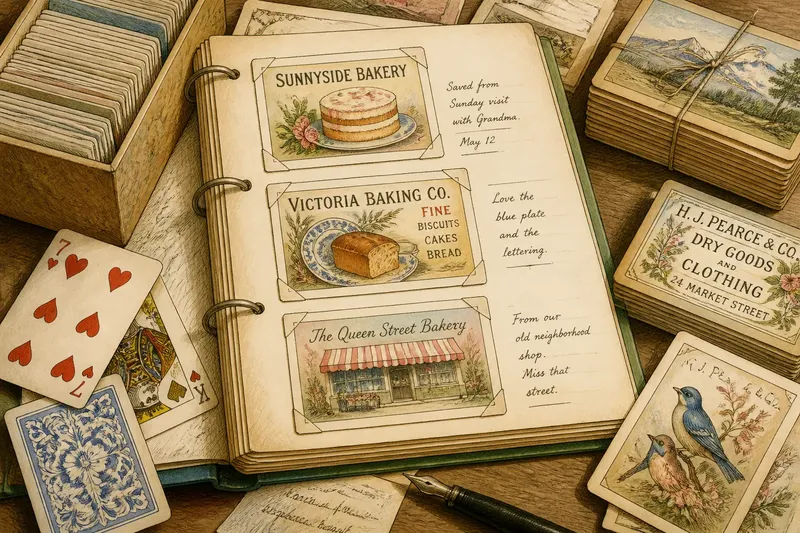
An album or scrapbook gave loose cards a place and made them easier to browse. Sorting by subject, maker, location, or visual style helped a keeper notice similarities and decide what to seek next. These habits could turn casual saving into a continuing pastime.
Say you have three cards from local bakeries: one saved from a family visit, one for its hand-drawn cake illustration, and one because its lettering catches your eye. You place them in a paper album and add a brief note beside each about why you kept it. If the images become the part you return to most, you might choose to focus on illustrated food cards; if the notes matter more, you might organize cards by the places and people connected to them. Either choice gives the group a clear direction without requiring a complete set.
How can you understand the appeal of a card collection?
Did card collecting start as soon as cards were printed?
No single date marks the start of collecting across all card types and places. Printing made cards available for many purposes, while keeping and organizing them as a hobby depended on individual habits.
Why keep a card after its original use has passed?
A person might keep it for an illustration, a message, a memory, or a connection to a game or place. A card could also belong with other pieces that shared a subject or design.
What role did albums play in card collecting?
Albums kept cards together and visible, making it easier to arrange and revisit them. A scrapbook could also preserve a short note about where a card came from or why it mattered.
Were cards collected only for their pictures?
No. People might value a card for its use in a game, its maker or location, its message, or its association with someone. The reason depended on the card and the person keeping it.
Choose a collection boundary that fits your interest
A simple boundary can make it easier to decide which cards belong without turning a pastime into a search for completeness. Use this checklist to choose a starting approach:
- Subject: Check whether you keep noticing one theme, such as birds or food. If you do, sort by that subject; if not, keep a broader group and add a subject label only when a pattern emerges.
- Origin: Check whether the place or person connected to a card matters most. If it does, write that detail on a separate note; if the origin is unknown, store the card without guessing.
- Design: Check whether color, lettering, or illustration draws your attention. If one visual feature stands out, group cards by it; if several features compete, keep them together and revisit your preference later.
- Use: Check whether you want to play with the cards or mainly display them. If you want to use a deck, keep it accessible; if its condition or design makes handling a concern, store it separately and seek specialist advice where needed.
- Space: Check whether your album or storage area has room for another card. If it does, add the card in a suitable place; if it does not, pause and decide whether to reorganize or leave the card out.
- Condition: Check for dampness, fading, or fragile paper before handling or storing a card. If it appears stable, use a dry, shaded storage place; if its condition is uncertain, avoid cleaning or forcing it into a sleeve and ask a paper conservator or knowledgeable specialist.
For everyday care, keep paper cards dry and out of direct sunlight, and keep food and drinks away from them. Use clean hands for fragile pieces and choose an album or sleeve intended for paper rather than squeezing a card into a tight pocket.
What made card keeping a pastime
Collecting cards became a pastime as people kept, arranged, and revisited objects that had first served other purposes. Printing and distribution supplied many kinds of cards, but their appeal depended on how people used them and what they chose to remember or compare.
The phrase when collecting cards became a pastime does not point to one universal date; it describes a gradual shift across different card traditions. To explore a specific branch, start with the card type and region, then check a relevant museum or library catalog before treating a historical date or origin story as settled.